If you’re caught in the middle of a crazy shift and just need a straight answer on the standard service factor for a hoist gearbox, let’s cut to the chase
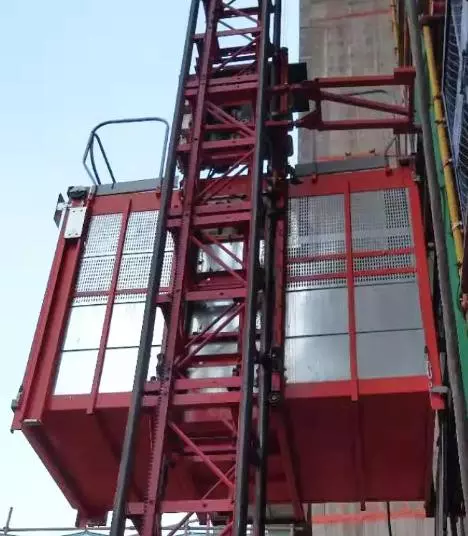
The “Goldilocks” Zone
For a piece of heavy-duty hardware like a construction hoist, a Service Factor (SF) between 1.5 and 2.0 is the industry’s “Goldilocks” zone.
- The Baseline: 1.5 is your absolute minimum.
- The Reality: Depending on whether you’re running a standard 8-hour shift or a 24/7 high-intensity site, that number needs to move.
- Primary Drive (SC200/200): In the construction hoist industry (specifically for rack and pinion systems), the SF usually ranges between 2.0 and 3.0 for the primary drive gearbox.
Choosing anything under a 1.5 SF is essentially a game of Russian Roulette for your gearbox. Don’t be surprised when it gives up the ghost early.
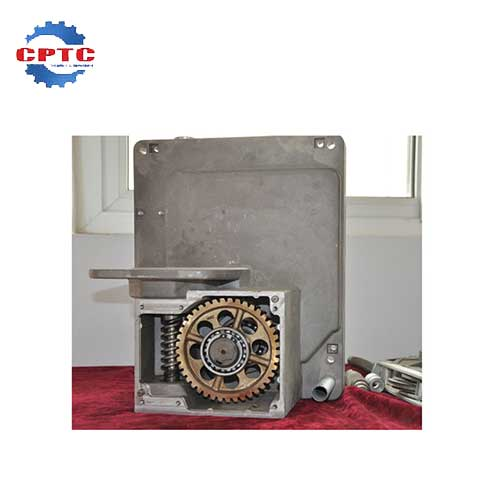
Why?
Because hoists involve human transport, frequent starts/stops (duty cycle), and potential shock loads. A 1.0 ratio means your gearbox is barely gasping for air under ideal conditions. In the real world, you’re dealing with maxed-out loads, abrupt braking, and wind shear every single day.In real-world projects, most engineers select 1.6–2.0, depending on duty cycle and site conditions.
- SF 1.0 – 1.2 (The Danger Zone): In the hoist world, this is a massive red flag. It assumes perfect conditions that never exist on a construction site.
- SF 1.3 – 1.5 (The Industry Standard): This is the “standard config” for most global SC200/200 units. Good for predictable, moderate use.
- SF 1.6 – 1.8 (The Heavy-Duty Sweet Spot): This is the best balance when you’re facing high-frequency “floor calls” and heavy material loads.
- SF 2.0 – 2.5 (Industrial Grade): Reserved for extreme environments or projects where safety requirements are off the charts.
- SF ≥ 3.0 (Specialized/Military): Only seen in precision labs or high-security government infrastructure.
First off: What exactly is SF? And how does it relate to your hoist’s gearbox? In plain English, think of the Service Factor as your ‘mechanical bumper.
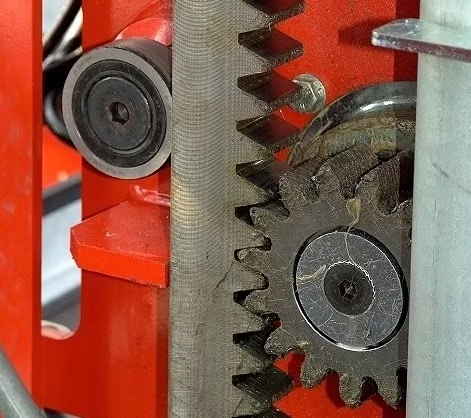
Think of the Service Factor as your mechanical “buffer” or insurance policy. In plain English, it’s the multiplier between the gearbox’s rated capacity and the actual demand of the motor. If your motor needs 100 HP and you choose a 1.5 SF gearbox, that box is built to handle a 150 HP momentary spike.
That extra 0.5 is there for those “heart-attack moments”—like when workers cram into the car at the last second, or a sudden gale-force wind slams against the mast during a lift.
Why 1.5 is Usually the “Floor”?
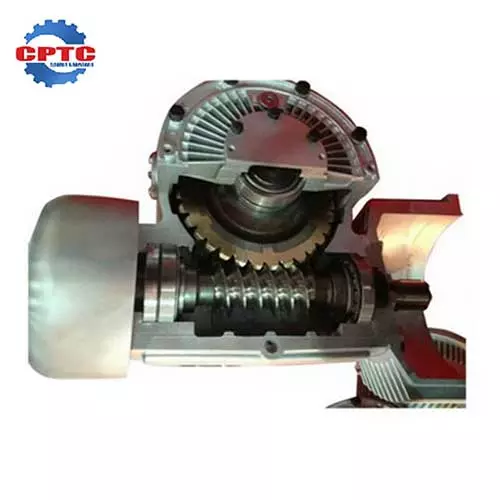
In the world of AGMA (American Gear Manufacturers Association) or ISO standards, construction hoists fall under “Moderate Shock” with “Frequent Start-Stops.” Because a hoist is a vertical application, the gearbox is fighting gravity from the very first millisecond. Every time that Motor Brake releases and the Pinion engages the Rack, a torque spike hits the gear teeth. A service factor of $1.5$ means your gearbox is rated to handle 50% more torque than the motor’s nominal rating. Anything less, and you are gambling with metal fatigue.
For the vast majority of SC200/200 rack and pinion hoists, 1.5 is the “Goldilocks” number. It’s what most manufacturers (like SEW, Nord, or CCKB) use for their standard drive units.
When 1.5 Just Isn’t Enough and How Matching SF to Your Construction Hoist?
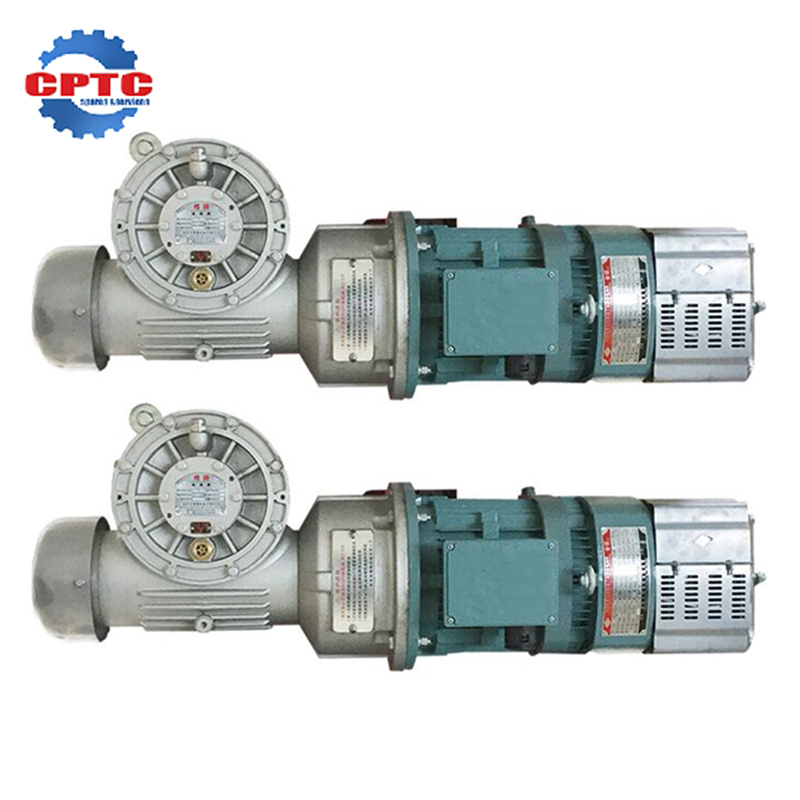
You need to bump that number up to 1.8 or 2.0 if your project hits any of these “Stress Multipliers”:
- Extreme Inverter Ramping: If your VFD (Yaskawa, ABB, or Schneider) is set for aggressive, ultra-fast starts to save time, the mechanical shock is much higher.
- High-Wind Environments: On high-rise coastal projects, wind load adds unpredictable lateral pressure on the Mast Sections and Rollers, increasing the drag on the drive.
- Poor Power Quality: If your site voltage drops, the motor draws more current and runs hotter, transferring that thermal stress directly into the gearbox seals and oil.
| Application Scene | Recommended SF | Risk Level if Too Low |
| Standard Site (≤ 8h/day) | 1.5 | Low. Standard wear and tear. |
| High-Rise / Heavy Material (10-16h/day) | 1.75 | Medium. Overheating, oil thinning, early pitting. |
| 24/7 Industrial or Infrastructure Work | 2.0+ | High. Total gear failure, snapped shafts, safety risks. |
| Extreme Dust / High Heat (>40°C) | 1.8 – 2.0 | High. Thermal breakdown of lubricants. |
After That:The Cost of Getting it Wrong: Beyond the Gearbox
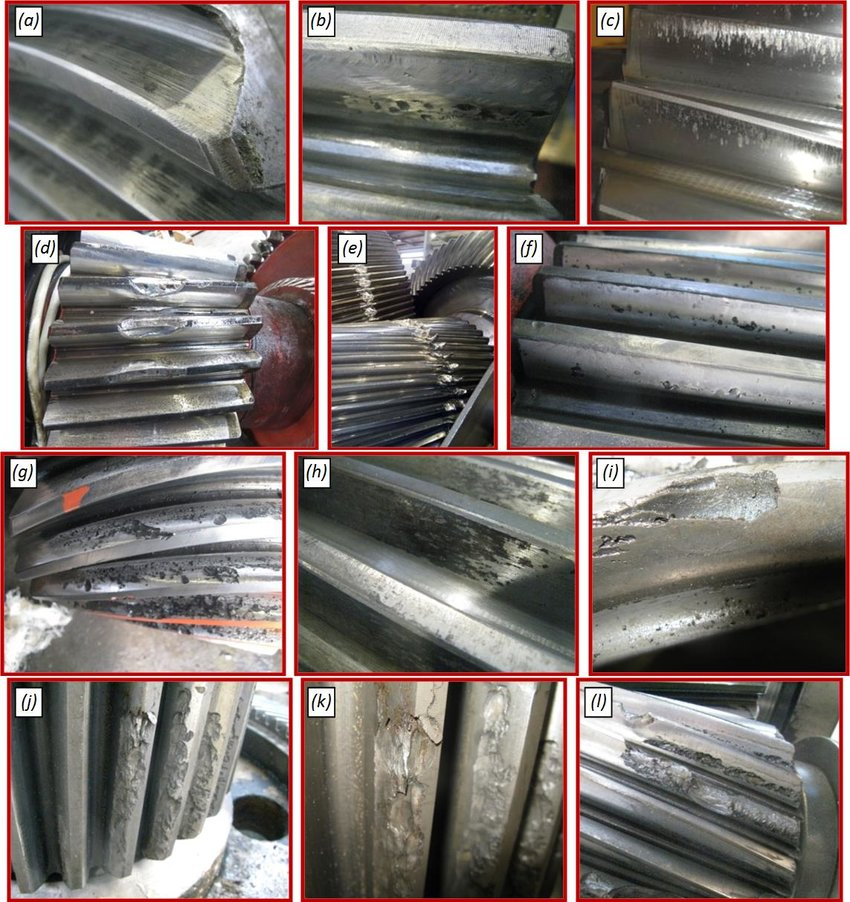
Choosing a gearbox with a low service factor to save a few hundred dollars usually ends in a “hidden” expensive disaster. When an undersized gearbox fails under load, it doesn’t just stop; it degrades:
- Gear Pitting: The teeth develop microscopic craters, leading to that “grinding” noise everyone on site hates.
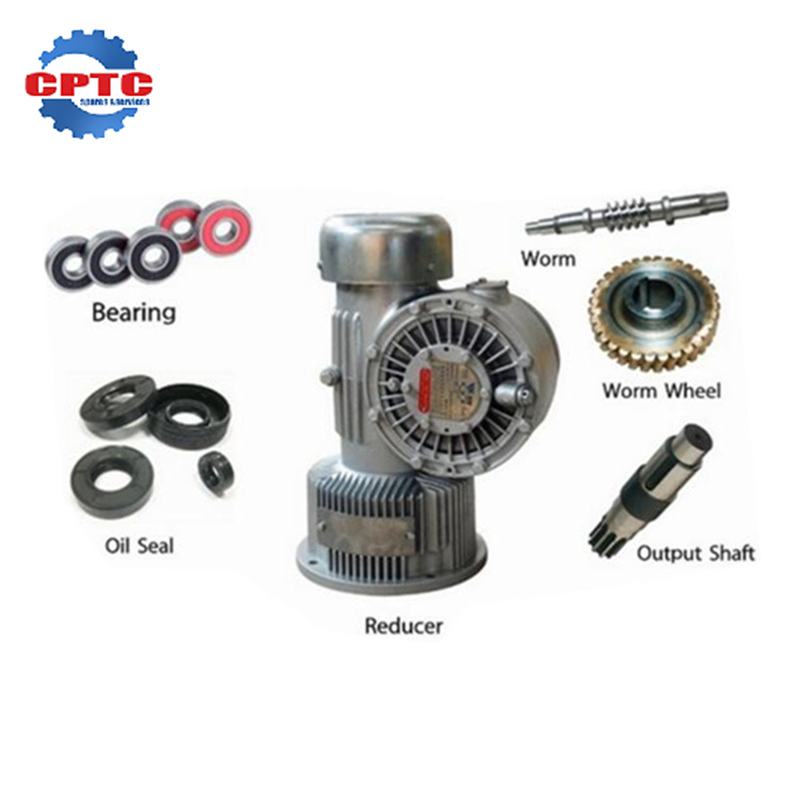
- Shaft Deflection: The Worm Wheel Shaft can actually flex under peak load, ruining your oil seals and causing leaks.
- Safety Risk: While the Safety Device (SRIBS) is there to catch the cage, a gearbox failure mid-travel causes massive downtime and expensive emergency repairs.
Finally, Construction Hoist Gearbox Service Factor in Scenario / Application
| Scenario / Application | Recommended Service Factor (SF) | Typical Usage / Why | Hardware Recommendation |
| Light Material Only (Non-Passenger) | 1.0 – 1.2 ⚠ | Very low runtime, minimal shock load, not designed for personnel lifting | Generic / Low-Cost Drive |
| Basic Personnel Lift (Low Frequency) | 1.5 | Low duty cycle, predictable loads, smooth operation | Standard Motor + Gearbox |
| Standard Construction (8–10h/day, Personnel + Material) | 1.6 – 1.8 | Moderate shock loads from moving materials and frequent floor stops | Nord / SEW Standard Series |
| High-Rise / Heavy Material | 1.8 – 2.2 | High inertia, wind resistance, constant acceleration/deceleration | Reinforced Gearbox + Synthetic Oil |
| Heavy Duty / Frequent Stops | 2.5 – 2.8 | Continuous mechanical shock, high stress on worm shaft and gear teeth | Reinforced Worm Wheel Shaft |
| Continuous Industrial / 24-7 Operation | 2.2 – 3.0+ | Thermal limits become critical; gearbox does not have cooling intervals | Custom Heavy-Duty Drive Device |
| Extreme Industrial Environment (Mining / Power Plant / 3-Shift Infrastructure) | 3.0+ | Maximum load factor, extreme reliability requirements | Fully Custom Drive System |
The “Silent Killers” of Your Service Factor
- The Heat Trap: Lots of engineers obsess over horsepower but forget the weather. If you’re working in Dubai or Texas where it’s 40°C+, your gearbox’s thermal capacity takes a massive hit. In the heat, a high SF isn’t just for torque—it’s your cooling system.
- The VFD Myth: Just because you’re using a VFD (Variable Frequency Drive) for smooth starts doesn’t mean you can skimp on the SF. Never go below 1.4. No matter how smart your software is, it can’t stop the brutal reverse shock of an emergency brake hit.