A crane sheave is a grooved wheel or pulley designed to guide, support, and control wire ropes, cables, or chains. As a fundamental component of crane rigging and lifting systems, sheaves dictate how safely and efficiently a crane can handle heavy loads. By controlling the precise path of the wire rope and multiplying lifting forces, they transform raw power into controlled precision.
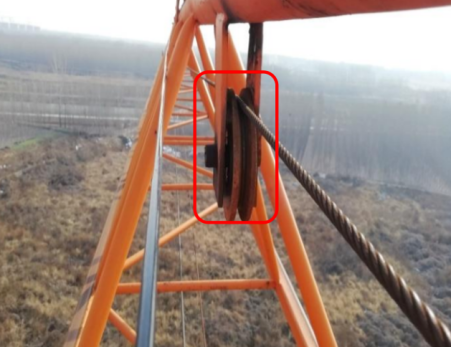
5 Core Functions of Crane Sheaves
Guide and Route Wire Ropes: Sheaves direct the wire rope seamlessly from the hoisting drum, up over the boom tip, through the hook block, and back, ensuring the rope stays securely on its designated path.
Minimize Friction and Wear: As the rope glides through the sheave groove and the wheel rotates on its bearings, it reduces severe bending stress, surface friction, and premature rope wear.
Provide Mechanical Advantage: In complex block-and-tackle configurations, multiple sheaves distribute the load across several rope segments, drastically lowering the tension required on each segment.
Ensure Smooth Load Control: By maintaining proper alignment and minimizing mechanical resistance, sheaves allow crane operators to lift, lower, and position loads with high precision.
Transmit Lifting Force: They act as the critical load-bearing bridge between the crane structure, the boom, and the hook block, efficiently transferring the force needed to move heavy materials.
How Fixed and Moveable Pulleys Combine
In professional crane engineering, relying on a single type of pulley is rarely enough. Cranes utilize sheave assemblies that combine the strengths of both systems:
Movable Pulleys: Tackle heavy-load challenges by cutting the required physical effort in half, though they demand more rope travel distance.
Fixed Pulleys: Do not reduce effort, but they redirect the pulling force into safe, ergonomic directions (such as pulling downward using gravity).
Together, they create a balanced system that maximizes lifting power, changes direction smoothly, and maintains operational safety on the job site.