In case you want to know the answer to “What are the two types of elevated work platforms?”, then here it is in the most concise form possible:
Lift Platforms
- Scissor Lift: Vertical Stability + Cost Efficiency.
- Boom Lift: Height Flexibility + Obstacle Reach.
Knowing the difference between the two will help you in selecting the most appropriate tools for the project, thus enhancing the project’s safety, productivity, and overall budget.

What Types of Elevated Work Platforms Exist?
An Elevated Work Platform (EWP) is an apparatus designed for the safe lifting and lowering of workers, tools, and other materials to and from high working areas. Moreover, EWPs are vital for the carrying out of most construction, maintenance, and installation works, whether indoors or outdoors.
| Classification Basis | Categories | Description |
| By Power Source | Electric Diesel Hydraulic | Fixed: Permanently installed at a facility, often used in manufacturing or maintenance bays.Mobile: Towable or self-propelled, suitable for construction and field operations. |
| By Mobility | Fixed Mobile | Scissor Lifts – Vertical movement only Boom Lifts – Vertical + Horizontal reach (Extended Category) Suspended Platforms – Suspended from the top, not ground-supported |
| By Structure & Movement Type | Scissor Lifts – Vertical movement only. Boom Lifts – Vertical + Horizontal reach (Extended Category) Suspended Platforms – Suspended from the top, not ground-supported | Scissor Lifts: Designed for stable, straight-up elevation on flat surfaces.Boom Lifts: Offer versatile reach for complex or outdoor tasks.Suspended Platforms: Used for top-down access, such as façade cleaning or high-rise construction. |
Among these, Scissor Lifts and Boom Lifts are the two fundamental types most commonly used and compared.
What Types of Elevated Work Platforms Exist?
This section covers the primary focus of the user. Understanding:
- What is the reason for classifying these two types differently
- The typical application for each type
- Comparison between the types in terms of performance, price, and safety
Scissor Lifts
Scissor lifts are designed for stable, vertical lifting with a large platform capable of holding multiple operators and tools.
| Category | Details |
| Subtypes | Electric Scissor Lift: Battery-powered, quiet, and emission-free — ideal for indoor use.Rough Terrain Scissor Lift: Diesel-powered, equipped with large tires for uneven or outdoor terrain. |
| Key Features | Indoor installation and electrical maintenance, Warehousing and logistics operations, Factory equipment repair, or ceiling work |
| Suitable For | No horizontal outreach (cannot work over obstacles) Limited height range (typically 6–18 meters), Requires flat, stable surfaces for safety |
| Limitations | No horizontal outreach (cannot work over obstacles), Limited height range (typically 6–18 meters), Requires flat, stable surfaces for safety |
Boom Lifts
Boom lifts provide both vertical and horizontal reach, making them ideal for accessing complex or elevated structures that scissor lifts can’t reach.
| Category | Details |
| Subtypes | Telescopic Boom Lift (Straight Boom): A straight extendable arm providing maximum outreach and height. Best for open, outdoor job sites.Articulating Boom Lift (Knuckle Boom): Multijointed arms that move up, over, and around obstacles. Ideal for confined or obstructed work areas. |
| Key Features | Vertical + horizontal mobility. Maximum working height up to 40 meters or more. Suitable for rough terrain and outdoor conditions. Requires trained operators for safe handling |
| Suitable For | Vertical + horizontal mobility. Maximum working height up to 40 meters or more.e Suitable for rough terrain and outdoor conditions. Requires trained operators for safe handling |
| Limitations | Building façade maintenance and painting, Bridge and tower inspection, Tree trimming, power line work, and outdoor construction |
Scissor Lifts vs Boom Lifts: Which is best for me
This is the key decision section — helping users choose the most suitable equipment for their specific project.
| Comparison Criteria | Scissor Lift | Boom Lift |
| Movement | Vertical only | Vertical + Horizontal |
| Max Height | 6–18 m | Up to 40+ m |
| Platform Size | Large, supports multiple workers | Smaller, typically for one operator |
| Terrain Suitability | Flat, stable ground | Outdoor, uneven terrain |
| Operator Skill | Easy to operate | Requires training |
| Stability | Very stable | Slightly less stable |
| Mobility | High | High |
| Cost / Rental Rate | Lower | Higher |
| Best For | Indoor maintenance, warehouse use | Outdoor construction, façade work |
Selection Recommendations
- Choose a Scissor Lift if you need stable, vertical access on level ground at lower heights.
- Choose a Boom Lift if your job requires flexible outreach, complex access, or outdoor adaptability.
- Short-term project? Rent for cost efficiency.
- Long-term outdoor use? Consider investing in a boom lift for better value.
Summary
- The chief types of Elevated Work Platforms are classified based on their lifting mechanism and range of motion as Scissor Lifts and Boom Lifts.
- Scissor Lifts are of low price and offer vertical stability, thus, are best for indoor and flat-ground operations.
- Boom Lifts are best for outdoor, high, or complex surroundings as they offer extended reach and flexibility.
- Ultimately, it comes down to your work height, terrain conditions, safety standards, and of course, your project budget.
Related Products
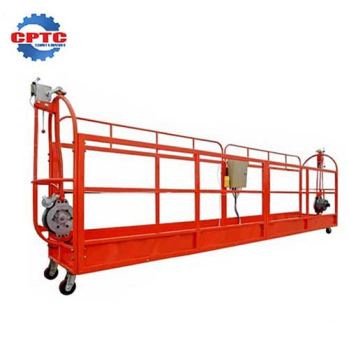
Construction Platform
With a lightweight…
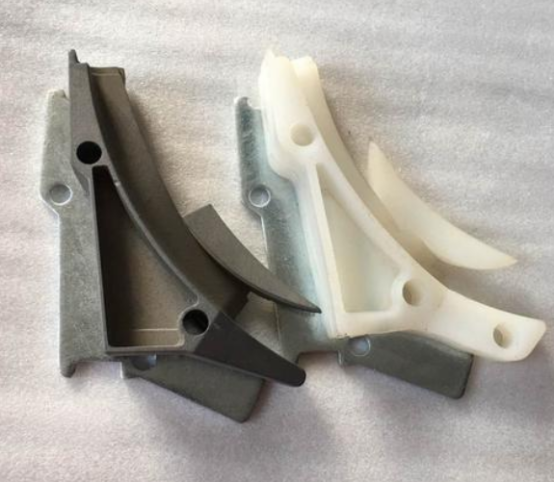
Nylon Splitter
Durable and Long-lasting
Electromagnetic Brake Coil
Electromagnetic Brake Coil
High-speed, high-precision control
Quick-acting, precise control
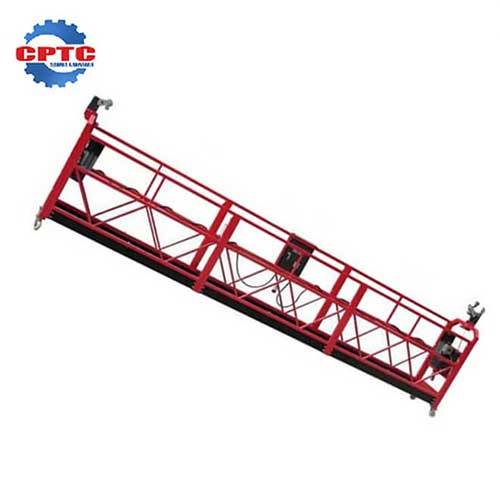
ZLP Series Suspended Platform
Simple and quick installation
Multiple security measures
Stable and…