When selecting a lever hoist, you should first match its Working Load Limit (WLL) to your expected maximum load, and then verify the lift height, headroom, duty cycle, and site conditions. For construction applications, a lever hoist is an ideal choice if you need portable lifting, pulling, tensioning, or precision positioning in confined spaces. However, it is not designed for continuous, high-volume vertical hoisting.
Lever Hoist vs. Construction Hoist
If you were comparing a lever hoist to a manual chain block / vertical chain hoist, the key difference is that a lever hoist uses a ratchet handle to pull/lift in any direction, whereas a chain block uses an endless hand chain designed strictly for vertical overhead lifting.)
| Feature / Metric | Lever Hoist (Manual Rigging Tool) | Construction Hoist (Building Elevator System) |
| Operation & Drive | Manual: Hand-operated via a ratchet lever handle mechanism. | Motorized: Powered rack-and-pinion drive system (Electric or Diesel). |
| Direction of Force | Multi-Directional: Vertical lifting, horizontal pulling, angle tensioning, and precision alignment. | Strictly Vertical: Operates straight up and down along a mast anchored to a building frame. |
| Load & Capacity | Typically 0.75 to 6 tons for localized machinery or rigging work. | Heavy-duty, typically 1 to 4+ tons per cage carrying personnel and bulk cargo. |
| Travel Distance | Short reach (standard chain lengths of 5 ft to 20 ft). | High vertical reach (tens to hundreds of meters/dozens of building floors). |
| Portability & Setup | High Portability: Compact, handheld, easy to transport and hook onto anchor points quickly. | Fixed Infrastructure: Requires structural anchoring, mast installation, and formal site setup. |
| Typical Applications | Aligning steel beams, pulling pipes, cable tensioning, and positioning machinery in tight spots. | Transporting construction crews, rebar, drywall, concrete pallets, and debris across floors. |
How to Choose a Lever Hoist for a Construction Site?
Rule of Thumb: Establish the capacity first, select corrosion-resistant materials for harsh environments, demand a fully enclosed brake system, and never compromise on safety certifications.
Load Capacity (Working Load Limit – WLL)
The primary consideration is matching the hoist’s Working Load Limit (WLL) to the maximum load you intend to lift, pull, or tension. Standard construction sites typically require capacities ranging from 0.75 tons to 6 tons. It is best practice to select a hoist with a capacity slightly higher than your usual maximum load to safely handle dynamic forces, but never exceed the official rated capacity.
Environmental Durability & Protection
Construction sites present tough working conditions, including dust, mud, moisture, and impact risks. For long service life, look for impact-resistant stamped steel or aluminum alloy housing to protect internal mechanisms from drops. For outdoor or humid work, ensure the chain and hardware feature zinc plating or powder coating for maximum corrosion resistance, and insist on a fully enclosed double-pawl mechanical brake (such as a Weston-style brake) to prevent dirt and grit from compromising stopping power.
Essential Safety Features & Compliance
Safety is paramount on job sites, so your chosen hoist must comply with recognized international standards such as ASME B30.21 or EN 13157. Key built-in safety components include an overload protection mechanism (like a slip clutch) to prevent structural failure from excessive loads, alongside heavy-duty forged hooks with durable safety latches that ensure loads remain locked in place even when tension fluctuates.
Operational Convenience & Maneuverability
Site efficiency relies on user-friendly operation. Look for a reliable free-chaining mechanism that allows operators to quickly adjust chain length by hand when no load is applied, saving significant setup time. Additionally, a 360-degree rotating handle enables operators to work efficiently at any angle in cramped quarters while maintaining a safe standing position away from the load line.
Lever Hoist vs. Construction Hoist: When to Use Which?
When to Choose a Lever Hoist?
A lever hoist is the ideal equipment choice when your task requires horizontal pulling, angular tensioning, or multi-directional alignment rather than simple vertical movement. It is particularly effective in confined spaces with limited overhead clearance, where compact tools are necessary to manoeuvre efficiently. Riggers and technicians rely on lever hoists during steel structure erection, heavy machinery positioning, and piping connections, as the ratchet handle provides the precise, incremental micro-adjustments needed for exact alignment. Furthermore, because it operates manually without needing a power supply, it serves as an exceptionally portable tool that workers can effortlessly transport across different locations on a job site.
When to Choose a Construction Hoist?
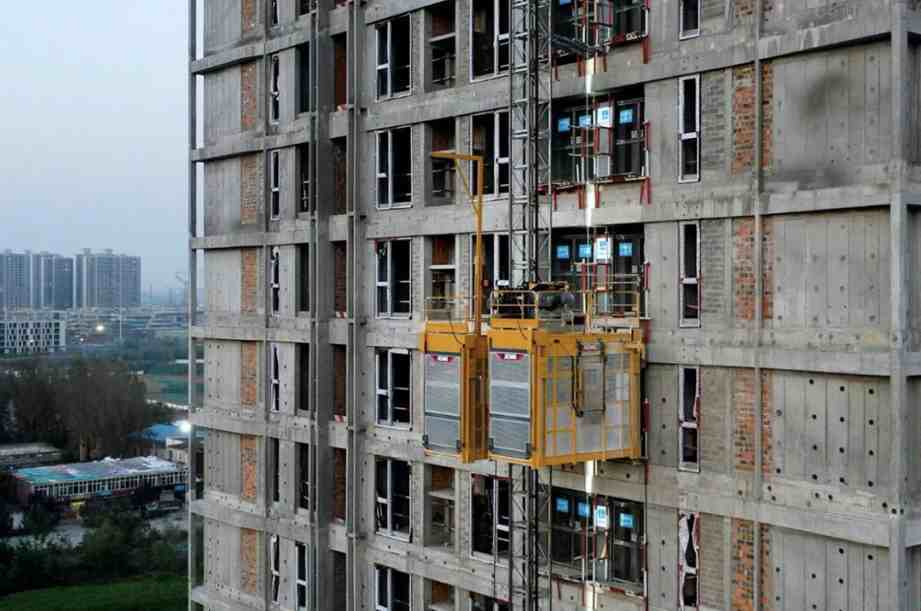
A construction hoist is the appropriate solution when a project demands the rapid and safe vertical transportation of personnel, crews, and tools up multi-story building frames. It is designed specifically for high-volume, continuous vertical material handling, making it indispensable for transporting bulk construction materials—such as drywall panels, rebar, flooring, and bricks—to elevated work platforms. Consequently, construction hoists are essential infrastructure for high-rise building renovation, multi-story structural erection, and exterior façade installation projects.