The decision between the ABB ACS580 and ACS880 for construction hoists boils down to one essential question: Is your system managing a regular motor load, or a heavy industrial lifting operation?
- ACS880: ABB’s heavy industrial equipment. It boasts Direct Torque Control (DTC), encoder functionality, and embedded braking control. This enables the ACS880 to deliver full torque at zero speed. Hence, it is ideal for passenger elevators, high-speed lifts, and twin motor configurations.
- ACS580: General load control unit. It manages regular loads such as compressors, conveyor belts, pumps, and fans. Despite its robust features, it is better used for small-scale freight lifts.
Therefore, in most professional applications involving construction hoists, the ACS880 becomes the right choice.
ABB Inverter ACS580 vs. ACS880,Key Differences
| Feature | ACS580 (General Purpose) | ACS880 (Industrial) |
| Control Method | Vector Control | DTC (Direct Torque Control) |
| Anti-Slip Safety | Good (Standard) | Superior (Zero-speed torque) |
| Load Handling | 110%–150% Overload | 150%–200% Heavy Duty |
| Firmware | Standard Application Macro | Dedicated Hoist/Crane (+N5050) |
| Communication | Built-in Modbus RTU | Highly Expandable (Profibus/Profinet) |
| Price Point | Competitive / Mid-range | Premium / Higher Cost |
ABB ACS580: The Cost-Effective “Workhorse”
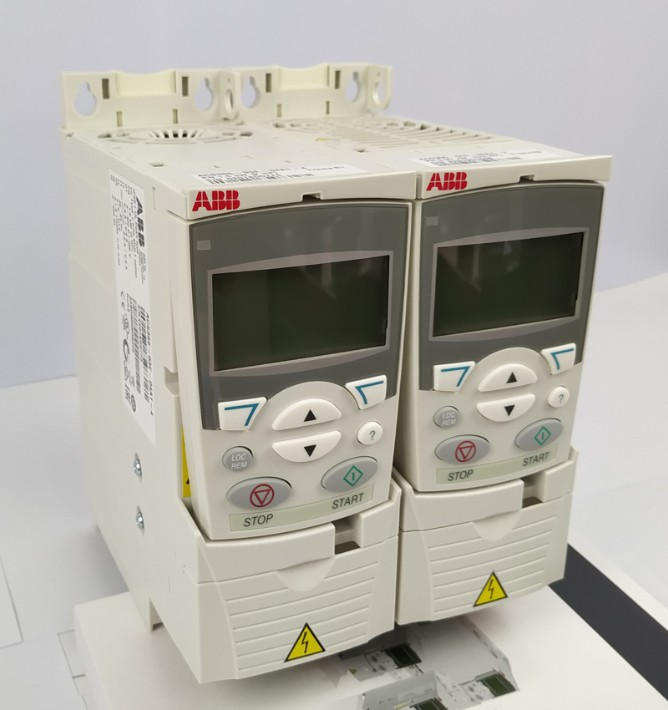
However, the ACS580 incorporates advanced Vector Control technology. Although robust, it uses complex mathematical algorithms to predict motor positions. In general, it is the “standard” option for mid-size hoists based on the cost.
Pros
- Cost-Effective: Relatively cheap compared to the ACS880, suitable for regular projects.
- Easy Commissioning: “Primary Settings” feature helps to install it fast without involving any specialist.
- Space Saving: Its compact size means that it can be installed easily in the small electrical panel cabinet.
Cons
Vector control technology cannot provide ultra-precise torque control like the ACS880 under full load conditions or slow motion.
Best for
Standard rack-and-pinion hoists (speeds up to 40 m/min), lifts for building materials, and residential projects.
ABB ACS880: The High-Performance “Expert”
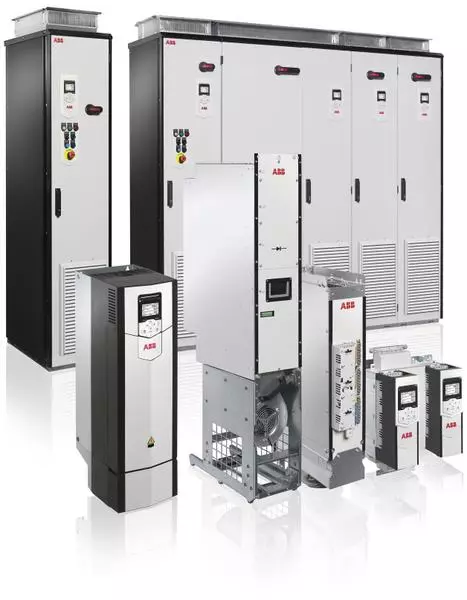
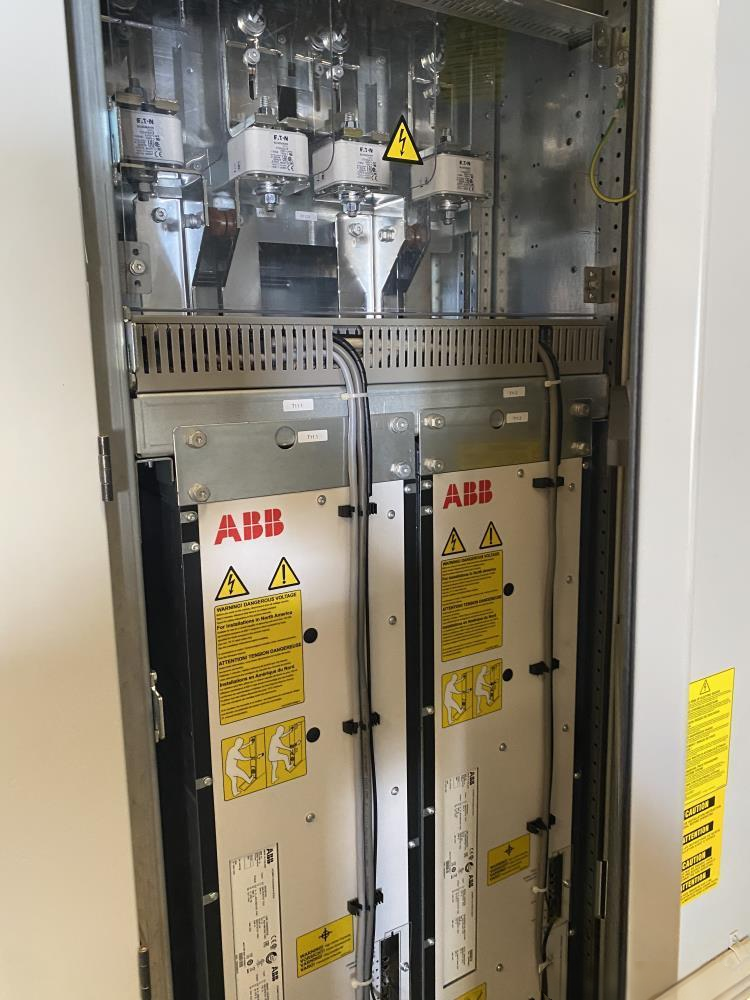
ACS880 Drive is considered the Gold Standard for high-speed and heavy-lift hoist applications. This drive makes use of the latest DTC technology from ABB that performs calculations of motor torque up to thousands of times in one second to ensure torque production even at zero speed, hence, no roll-backs when opening the mechanical brake.
Pros
- DTC Technology: Delivers 100% torque at zero speed without sliding or jerks on start-up for maximum ride quality.
- Specialized Hoist Control Software (plus N5050): Features specialized control software like Brake Match, Anti-Interlocking, Speed Correction, etc.
- Master/Slave Functionality: Allows fiber optic communication for total synchronization of the hoist system in double cage/multi-motors (SC200/SC300).
- Overload Capability: Designed to tolerate overloading up to 150% to 200% frequently encountered in heavy lifting applications.
Cons
Higher cost of initial installation and complicated parameters.
Best For
High-speed hoists >60m/min, high-rise buildings >100m, and industrial applications.
When to Choose Which?
Select ACS580 if:
- The project involves a standard residential or mid-rise building construction.
- Speed is standard (around 33m/min to 46m/min).
- The intention is to get ABB quality and reputation at an affordable price without going for an industrial drive.
Select ACS880 if:
- The project involves skyscraper construction (over 150m), bridge or dam construction.
- Speed is high-speed (60m/min to 100m/min+).
- The project involves a dual cage or three motor operation with the need for exact synchronization.
- The intention is to achieve utmost safety, smoothest operation, and absolutely no machine wear and tear.
Essential Add-On: The Braking Resistor
Regardless of which series you choose, a construction hoist is an overhauling load application, meaning it generates power while descending. The ABB drive must be paired with a properly sized braking resistor.
- ACS580: Larger frame sizes usually require an external braking chopper.
- ACS880: Often includes an internal braking chopper (depending on frame size), but still requires an external braking resistor to dissipate heat.