In tower crane operations, the slewing system is often referred to as the crane’s “neck.” To ensure your replacement motor is accurate, compatible, and reliable (“Buy Right, Fit Right, Run Steady”),
This guide breaks down the selection logic for major brands like Potain, Zoomlion, and Liebherr to help you achieve precise modeling and cost-effective maintenance.
Can OEM Parts Replace Original Tower Crane Slewing Motors?
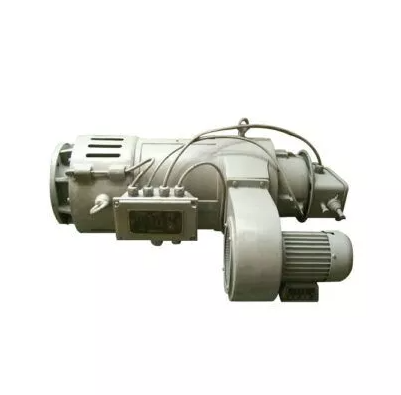
The answer is yes. The key lies in a 1:1 parameter match. Most major tower crane manufacturers (such as Zoomlion, XCMG, and Potain) do not manufacture the motors themselves; instead, they source customized models from specialized motor factories.
Many owners worry that non-original parts will cause rotation issues. However, if the following three factors are identical, OEM components perform just as well as original parts while reducing costs by approximately 30%:
- Mechanical Interface: Flange dimensions and output shaft specs.
- Gear Parameters: Number of teeth and module.
- Electrical Specs: Frequency, power, torque curves, and duty cycle (must be S3-25% or higher).
The Best Replacement Slewing Motors for Potain Tower Cranes: Essential Matching for RCV/RVF System Speed Feedback Signals
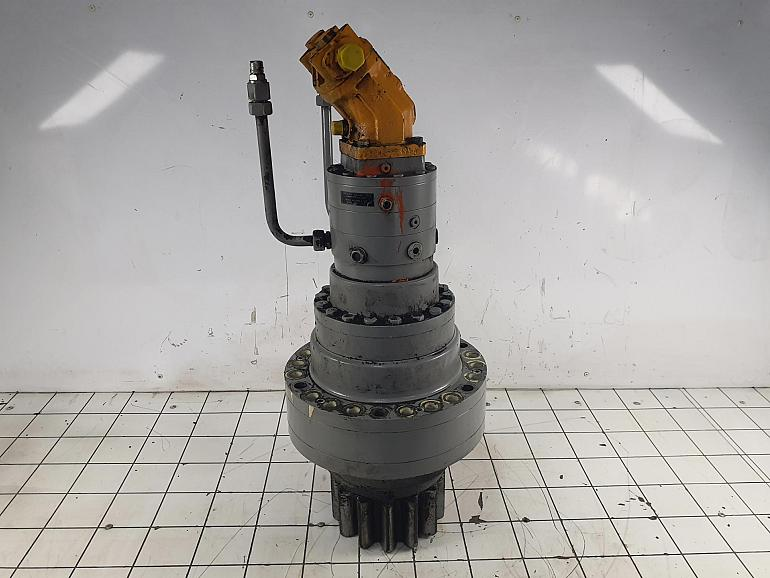
Potain cranes demand extremely high standards for slewing smoothness. When replacing a slewing motor, precision matching and safety standards are critical. Using an incorrect motor will cause the jib to swing violently (rebound) when the rotation stops.
- Equipment Compatibility: For the MC Series (MC115, MC175, MC310), it is highly recommended to select the 9.5 RCV or 15 RCV motor models, which feature an integrated Eddy Current Brake.
- Key Replacement Requirement: You must verify if the motor is equipped with a Tacho (Tacho-generator) at the rear. The Potain control system relies on this signal to achieve “zero-speed braking.” Without this feedback, the crane will trigger a synchronization error.
Replacement Solutions: Potain Standard Series (MCR, MDT, etc.)
| Original Potain Model | Recommended Replacement | Key Parameter Matching | Applicable Crane Models |
| YZR132M2-6 (3.7kW) | YZR132M2-6 (Premium OEM) | Torque: 18.2N·m; Speed: 940rpm; Shaft: 38mm | Small/Medium cranes (MCR225, MDT178, etc.) |
| YZR160M2-6 (7.5kW) | YZR160M2-6 (Certified OEM) | Torque: 37.8N·m; Speed: 970rpm; Flange: 180mm | Large/Medium cranes (MDT219, MCT325, etc.) |
| Hydraulic Motor A6VM107 | Rexroth A6VM107 (Compatible) | Disp: 107cc; Pressure: 35MPa; Torque: 520N·m | Heavy-duty cranes (MCT800, MCT1000, etc.) |
Zoomlion (ZOOMLION) Compatible Motors: Gear Precision & VFD Adaptation
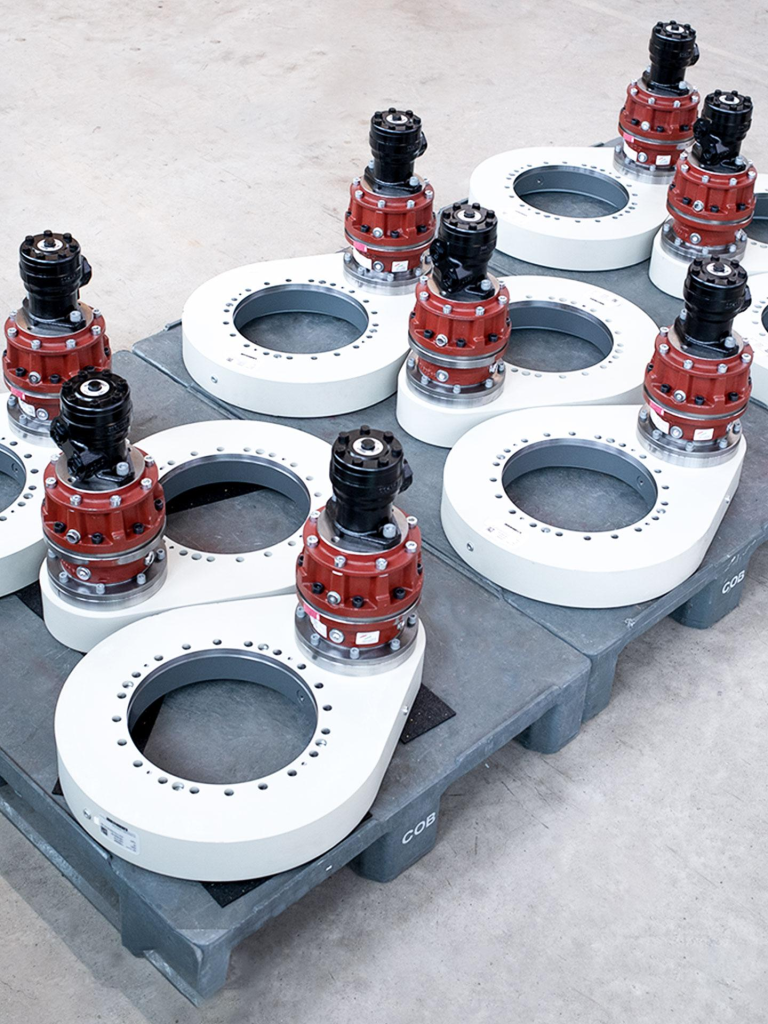
As a dominant player in the tower crane industry, Zoomlion’s replacement motors must balance cost-effectiveness with strict performance matching. For models like the TC5610 and TC6012, the most common cause of slewing failure is an incompatibility between the motor and the Variable Frequency Drive (VFD).
- Define Electrical Parameters: For typical 5.5kW or 7.5kW mechanisms, the motors are usually 6-pole (6P) designs with rated speeds between 900 and 960 rpm.
- Prevent “Mechanical Mismatch”: You must verify the number of teeth (Z=12 or 14) and the module (M8, M10, M12) of the output gear. Even a 0.5 module error can lead to gear stripping on the slewing ring or a snapped motor shaft.
Zoomlion Mainstream Model Compatibility Table
| Model Series | Original Configuration | Performance Recommendation | Core Parameter Guarantee |
| TC5610-6 | YZR132M-6 (3.7kW) | YZR-H 132M2-6 | Overload: Max torque ratio $\geq 2.5$; Protection: IP55. |
| TC6015 / 6517 | YZR132M-6 (3.7kW) ×2 | YTLEJ-H 132M-95 | Brake Torque: 120Nm; Insulation: Class H (180°C). |
| T7020 / T6513 | YZR160M-6 (7.5kW) | YTLEJ-H 160M-120 | VFD Optimized: High-permeability silicon steel for 5Hz-75Hz. |
| TC7030-12 | YZR160L-6 (11kW) | YTLEJ-H 160L-145 | Start Torque: Reinforced rotor; torque boosted by 20%. |
| T8030 / T7525 | Custom VFD System | YTLEJ-H 180M-185 | Durability: SKF/NSK bearings for high axial impact. |
| W12012-25 | Hydraulic A31FD160 | Rexroth A31FD (Premium) | Efficiency: $\eta \geq 95\%$; Peak Pressure: 40MPa. |
Liebherr Replacements: 190V Brake Voltage & Spline Interfaces
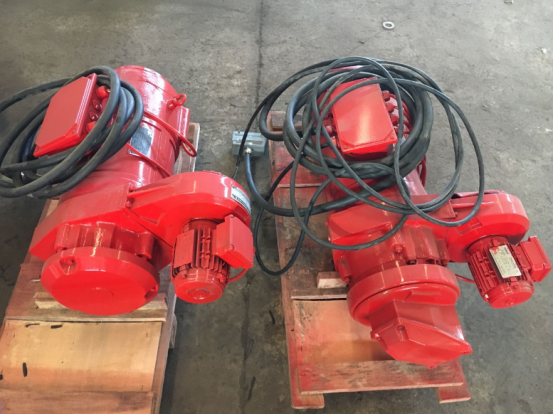
Liebherr tower cranes are known for high integration. Their slewing motors must adhere strictly to OEM standards, as generic alternatives often cannot be installed.
- Spline Shaft Interface: Liebherr (e.g., EC-H series) often uses an Internal Spline (DIN 5480) rather than a standard keyway. Confirm tooth count and pressure angle before ordering.
- Avoid Motor Burnout: Liebherr slewing brakes typically run on DC 190V. If a replacement mistakenly uses an AC 380V brake, the brake will not fully release, causing the motor to overheat and burn out within minutes.
Liebherr Compatibility Guide (EC-H, HC, LC Series)
| Liebherr Series | Example Models | Power (kW) | Interface Type | Compatibility Key Point |
| Small (LC) | 32 LC, 56 LC, 71 LC | 3.0 – 5.0 | Keyway / Small Spline | Verify brake voltage is DC 190V. |
| Standard (EC-H) | 112 / 132 / 154 EC-H | 5.5 – 7.5 | DIN 5480 Spline | Must match EDC 6-pole VFD curve. |
| Heavy (HC) | 256 / 290 / 550 HC | 7.5 – 11 | Large Spline | Requires forced air cooling system. |
| Flat-Top (EC-B) | 160 EC-B, 250 EC-B | 5.5 – 9.0 | Integrated Brake | Match FR-T VFD current parameters. |
Summary: How to Accurately Identify Your Motor
To solve the “won’t fit” or “won’t run” problem, check these three items before ordering:
Nameplate Information (Identity Card) (Solves parameter mismatch)
Take clear photos of the motor nameplate. Focus on: Power (kW), Rated Speed (r/min), Voltage (V), and Duty Cycle. Match the original power and torque curves.
Mechanical Interface (Solves “cannot be installed”)
- Flange Outer Diameter: Determines whether the motor can be mated with the gearbox. Strictly verify the flange and gear dimensions.
- Gear Parameters: Confirm the number of teeth (Z) and module (M) of the output gear. A deviation of even a single tooth will lead to an inability to install. Match the original power and torque curves.
Brake Voltage (Solves “Cannot Rotate Normally”)
Slewing motors usually come with a built-in brake. Ensure the motor is logically compatible with the existing frequency inverter or control console. It is mandatory to confirm whether the brake voltage is AC 380V or DC 170V/190V; connecting the wrong wires will instantly burn out the coil.
If you are uncertain about the specific model, the best method is to send all-around photos of the old motor and the tower crane model to an experienced supplier for a 1:1 comparison and confirmation by technical personnel.