That title belongs unconditionally to the SINAMICS V20 series. The SINAMICS V20 is Siemens’ most economical variable frequency drive (VFD) series, engineered specifically for basic motor speed control applications that do not require advanced motion control or complex networking.
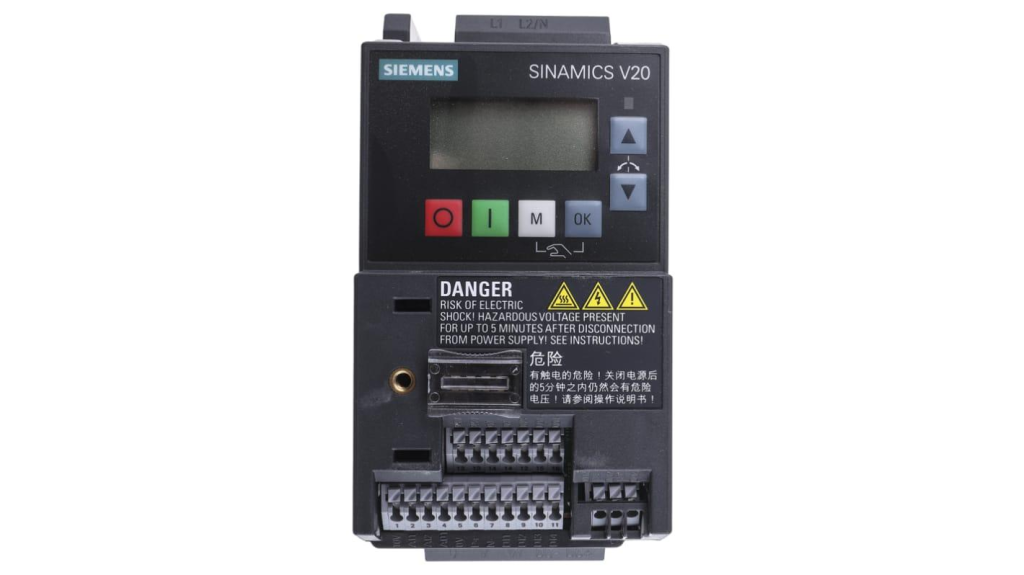
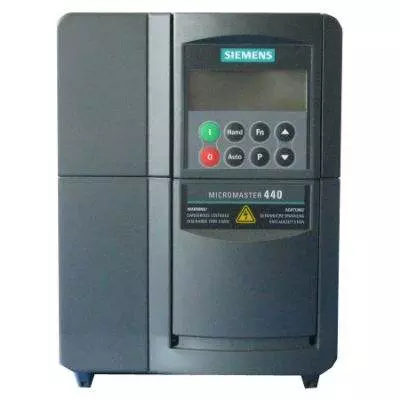
First Off, Why Is SINAMICS V20 Cheaper?
Unlike its bigger brothers (the G120 or S120)—which require you to separately purchase a Power Module, a Control Unit, and an Operator Panel—the SINAMICS V20 is a compact, monoblock (all-in-one) inverter.
Because of its all-in-one design and integrated basic operator panel, the entry-level price point is significantly lower. This makes the V20 Siemens’ direct weapon against cheap, economy-tier drives in the industrial market.
- Essential Connectivity: It features built-in USS and Modbus RTU serial communications rather than the premium, high-speed PROFINET industrial Ethernet ports.
- All-in-One Design: No need to mix and match individual components. You buy one part number, and it works straight out of the box.
- Basic Control Topology: It utilizes standard V/f (Voltage/Frequency) control and FCC (Flux Current Control). It completely lacks the advanced, high-precision vector control functionalities found in the G120.
Then,SINAMICS V20 Pros & Cons
Pros
- The built-in basic operator panel, along with pre-programmed application macros, lets you set up and start the system super fast. It handles harsh power grids and rough environments easily because of its wide voltage tolerance range, advanced cooling, and coated electronics. Plus, it comes with a PID controller for pressure and flow control and uses standard Modbus RTU for basic automation needs. This model is compact yet durable, making installations easier. Lastly, it has an ECO mode and sleep modes to use way less power when demand drops.
Cons
The V20 has some downsides. For one, it only works natively with USS and Modbus RTU. Trying to use it with PROFIBUS or PROFINET means getting an extra pricey gateway that slows things down too.
It mainly uses V/f control and doesn’t have an encoder feedback interface. So, it can’t do vector control or super precise speed regulation.
Another hit is its weak low-speed performance. Anything under 10 Hz, and it struggles to provide enough torque. This can cause problems like load jitter, slipping, or even stalling.
Oh, and there’s no built-in safety feature like Safe Torque Off. Higher-end models have those as standard.
Does the SINAMICS V20 support Vector Control?
No. The SINAMICS V20 only utilizes V/f and FCC control. For buyers, true vector control is absolutely mandatory if your system requires high torque at zero or near-zero speeds, or if it must maintain exact speed accuracy under wildly fluctuating loads (e.g., cranes lifting heavy weights or industrial mixers). The V20’s V/f control is strictly for applications where the load increases predictably with speed, or where minor speed variations under load spikes will not ruin the final product.
Main Applications
The V20 is meant for basic and affordable automation, making it a poor choice for heavy-duty or precisely synchronized tasks. Buyers and OEMs opt for it when they need something simple and that can adjust its speed, even if it doesn’t offer extreme precision.
The V20 really shines with pumps and fans used in HVAC and water treatment. It includes an ECO mode that adjusts magnetic flux based on the actual load for max energy savings. Things like centrifugal pumps, cooling fans, and exhaust systems work great here.
For moving materials around, you can get the job done with the V20 on standard conveyor systems. No need to overspend on a G120 just for adjustable speeds. It smoothly accelerates and brakes, ideal for conveyor belts, sorting systems, packaging lines, and more.
When it comes to small process machines, the V20 fits the bill for OEMs needing single-axis equipment. These include agitators, mixers, and centrifuges. You’ll also find it in small air compressors and commercial washers.
Lastly, the V20 suits low-complexity standalone automations. Think revolving doors, basic textile gear, and cut-to-length systems. So, it covers lots of ground for those looking for simple, cost-effective solutions.
Next, Hundreds vs. Thousands: Where is the Price Difference?
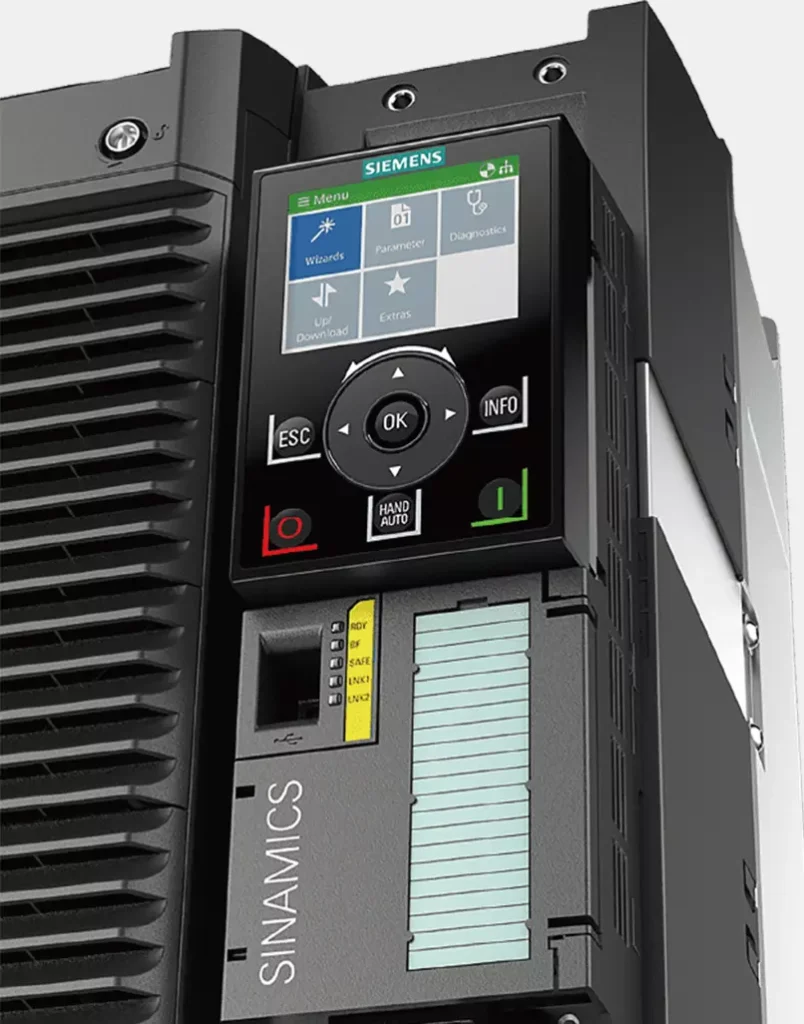
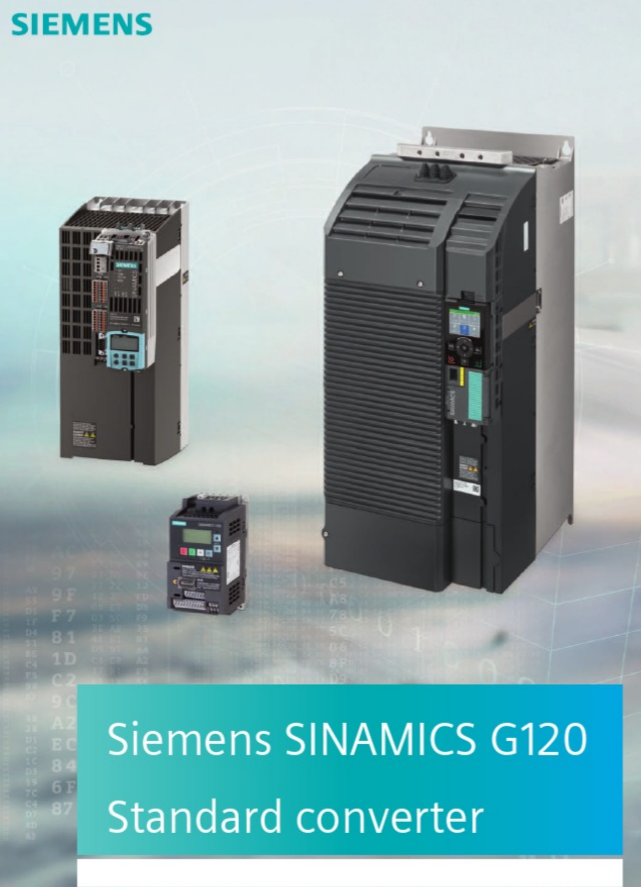
The core difference between a few-hundred-dollar Siemens V20 and a multi-thousand-dollar G120 boils down to Brainpower, Build Quality, and Networking Costs.
- The Networking Premium: The G120 features native, onboard PROFINET ports. Using a single Ethernet cable, a G120 can be fully integrated into a Siemens TIA Portal ecosystem alongside an S7-1200/1500 PLC within minutes. The V20, on the other hand, forces you to hardwire individual digital/analog I/O pins or map slower Modbus RTU registers, significantly increasing engineering labor hours.
- Overload Capabilities: G120 Power Modules (such as the PM240-2) are heavy-duty industrial beasts designed for “Heavy Overload” (HO), meaning they can handle up to 200% of their rated current for short bursts. The V20 features much lighter-duty hardware components meant to operate very close to its nominal power rating without sudden spikes.
| Comparison Metric | SINAMICS V20 (Economy Entry-Tier) | SINAMICS G120 (Modular Universal-Tier) |
| Design Architecture | Compact monoblock (all-in-one) design built specifically for cost-sensitive, basic speed adjustments. | Modular split design separating the Control Unit (CU) from the Power Module (PM) for flexible configurations. |
| Control Modes | Open-loop control (V/f, FCC) only. No encoder interface. Does not support Vector Control. | Supports both open-loop and closed-loop Vector Control. Optional encoder interface modules available. |
| Communication Protocols | USS and Modbus RTU only. No native support for PROFINET or PROFIBUS. | Multi-protocol support (PROFINET, PROFIBUS, Modbus RTU, CANopen). Seamless TIA Portal integration. |
| Functional Safety | None. Does not feature integrated safety functions. | Features Safe Torque Off (STO) as a standard built-in safety function. |
| Typical Applications | Simple, standalone machines: conveyors, small pumps, fans, basic mixers. | Complex automation: multi-drive production lines, cranes/hoists, extruders, high-end packaging. |
Final ,SINAMICS V20 vs SINAMICS G120:How to Choose
- Buy the SINAMICS V20 if: You are working with a tight budget, need to control a basic pump, fan, or simple conveyor belt, and plan to execute control using standard digital/analog hardwired I/O or Modbus RTU communication.
- Buy the G120/G120C if: You require native PROFINET industrial network connectivity to interface directly with a Siemens S7-1200/1500 PLC, need integrated functional safety (STO), or are running heavy-torque, high-inertia applications like cranes, hoists, lifts, or heavy industrial crushers that demand true vector control.