Among the most common types of suspended platforms that make use of these safety locks are the centrifugal safety locks and the tilt-sensing safety locks. However, the two share the same primary purpose; their modes of operation and the threats they protect against differ.
So, which one is safer for the ZLP800 suspended platforms?
For the ZLP800 model, the Tilt-sensing Safety Lock is the safer and more versatile option in a standard Construction Platform. It addresses the most common hazard, which is platform tilting, and still protects against cable breakage.
But what is safest about a platform is not just the lock itself, but a combination of a good hoist, a well-calibrated safety lock, and a well-trained operator.
Centrifugal Safety Locks vs Tilt-sensing Locks: How Do They Actually Work?
To understand safety, we must understand the trigger.
| Feature | Centrifugal Safety Lock (Speed-Based) | Tilt-Sensing Safety Lock (Anti-Tilt) |
| Detection Method | Centrifugal governor monitoring rope speed | Lever or pendulum detecting platform tilt |
| Activation Characteristics | Triggered by overspeed descent (>22–30 m/min); extremely fast response | Triggered by platform tilt (3°–8° incline); moderate response |
| Safety Coverage | Prevents free-fall caused by rope break or uncontrolled descent | Prevents platform imbalance caused by hoist failure or uneven load |
| Response to Motor Slip | Low sensitivity | High / critical response |
| Mechanical Design | Centrifugal governor mechanism | Lever or pendulum mechanism |
| Maintenance Requirement | Periodic speed calibration | Arm alignment and spring tension adjustment |
| Typical Model Series | LSF Series | LSL Series |
Centrifugal Safety Locks (The Speed Guard)
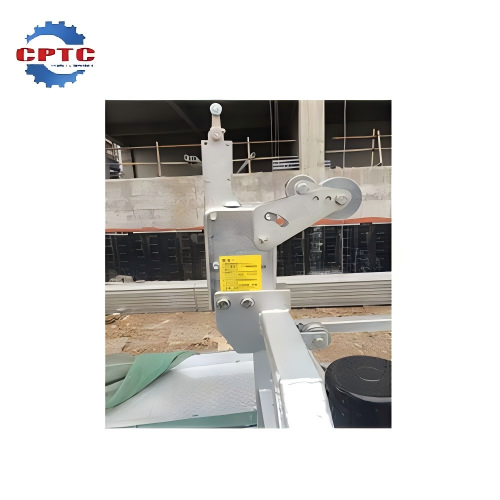
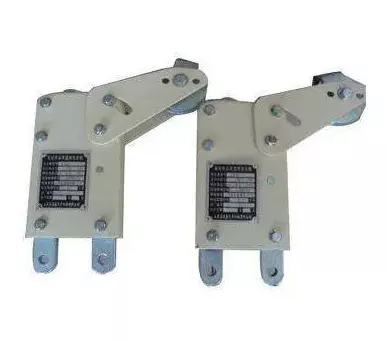
Analogous to the seatbelt in a car, this device measures the downward speed of the safety wire rope.
The Trigger: When the platform drops faster than a predetermined speed (>22m/min, >30m/min), the centrifugal weights swing out, locking the device.
Best For: Catastrophic cable failure, i.e., cable snaps, causing the platform to free-fall.
Tilt-sensing Safety Locks (The Balance Guard)
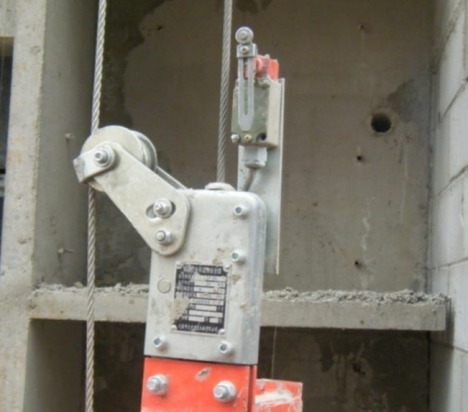
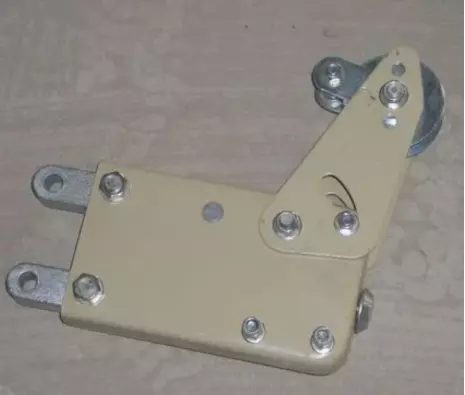
More commonly referred to as the LSL series, such as the LSL30, these detect horizontal levels.
The Trigger: A swinging arm rests on the safety rope. If the platform tilts (usually between 3° and 8°), it will move and instantly bite into the rope.
Best For: Uneven hoisting, motor failure on one side, or “tilting” hazards that don’t involve a free-fall.
Centrifugal Safety Locks vs Tilt-sensing Locks: Which is Safer for Your ZLP800?
The Main Hoist Rope Snaps: Centrifugal Lock
- Centrifugal Lock: High Performance. It detects sudden acceleration and locks within 10-20cm.
- Tilt-sensing Lock: Variable. If it stays relatively level while falling (which is rare), it may delay. However, in most cases, one side will snap first, and then it will tilt and lock.
One Motor Slips (The “Slow Lean”): Tilt-sensing Lock
- This is the most common problem with the ZLP800 equipment. A hoist will lose friction, and the platform will start to tilt.
- Centrifugal Lock: FAIL. This is because the speed has not yet reached the “free-fall” threshold.
- Tilt-sensing Lock: WINNER. This will immediately detect that the platform is tilted and lock the safety rope in place before it becomes a problem for workers and/or equipment.
High Wind Sway: Centrifugal Lock
- Centrifugal Lock: Stable. Not affected by swaying.
- Tilt-sensing Lock: Prone to “Nuisance Tripping.” Violent swaying may trigger the tilt arm, requiring workers to reset it manually—a minor nuisance for a major safety advantage.
Why Tilt-sensing is the “Standard” for ZLP800?
Although both have their merits, the Tilt-sensing Safety Lock is quickly becoming the world standard for ZLP800 platforms. Why?
Because in 90% of suspended platform accidents, the platform does not “drop” like an elevator in a disaster. Instead, it tilts due to unbalanced loads, motor failure, or cable jams. A centrifugal lock is blind to these “slow-motion” disasters.
For maximum safety, high-end ZLP800 configurations often use Redundancy. However, if you must choose one, the Anti-tilt (LSL30 style) provides the most comprehensive protection against everyday operational risks.